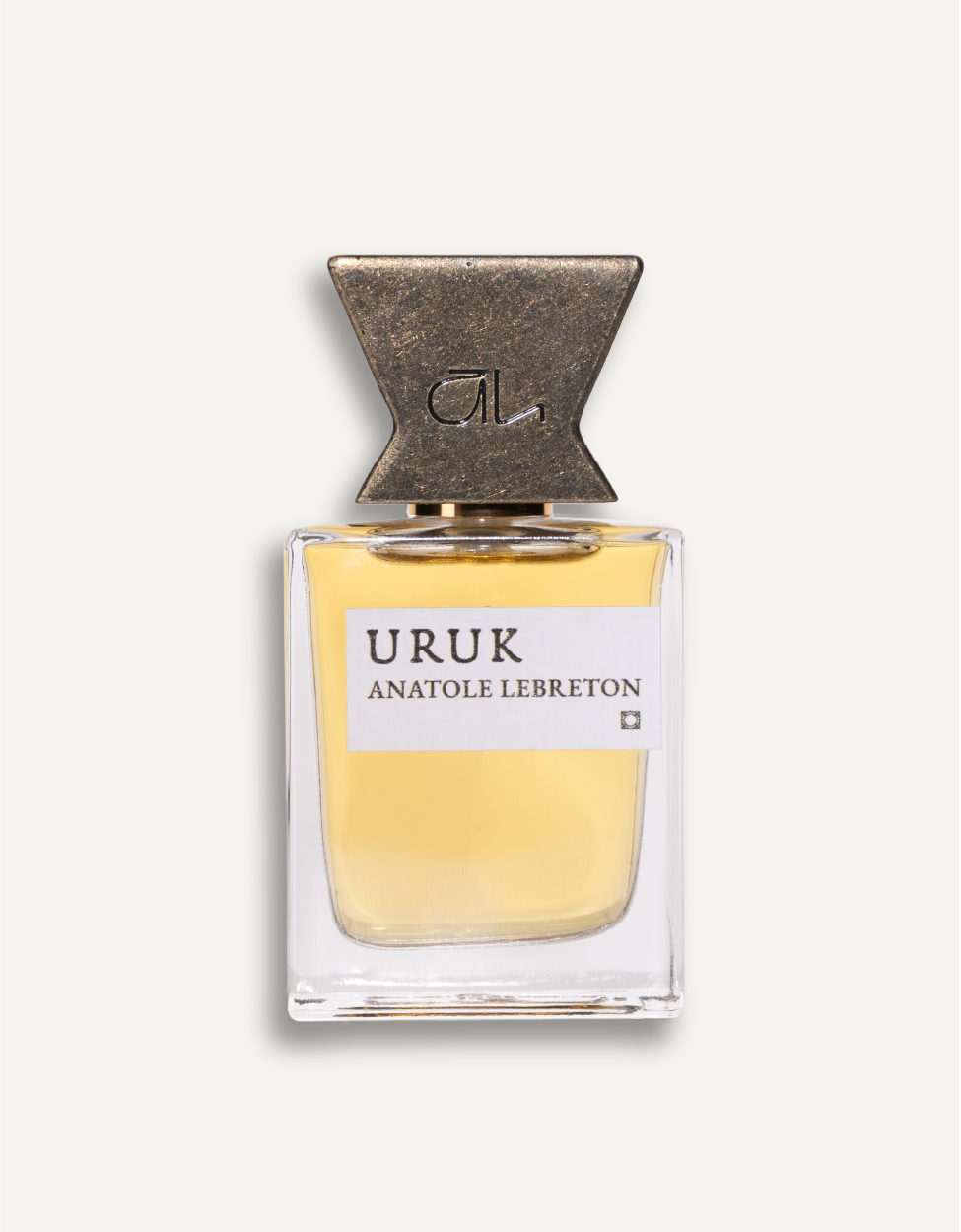
Uruk
Parfum
Resinous - spicy
Cistus labdanum, nutmeg, incense
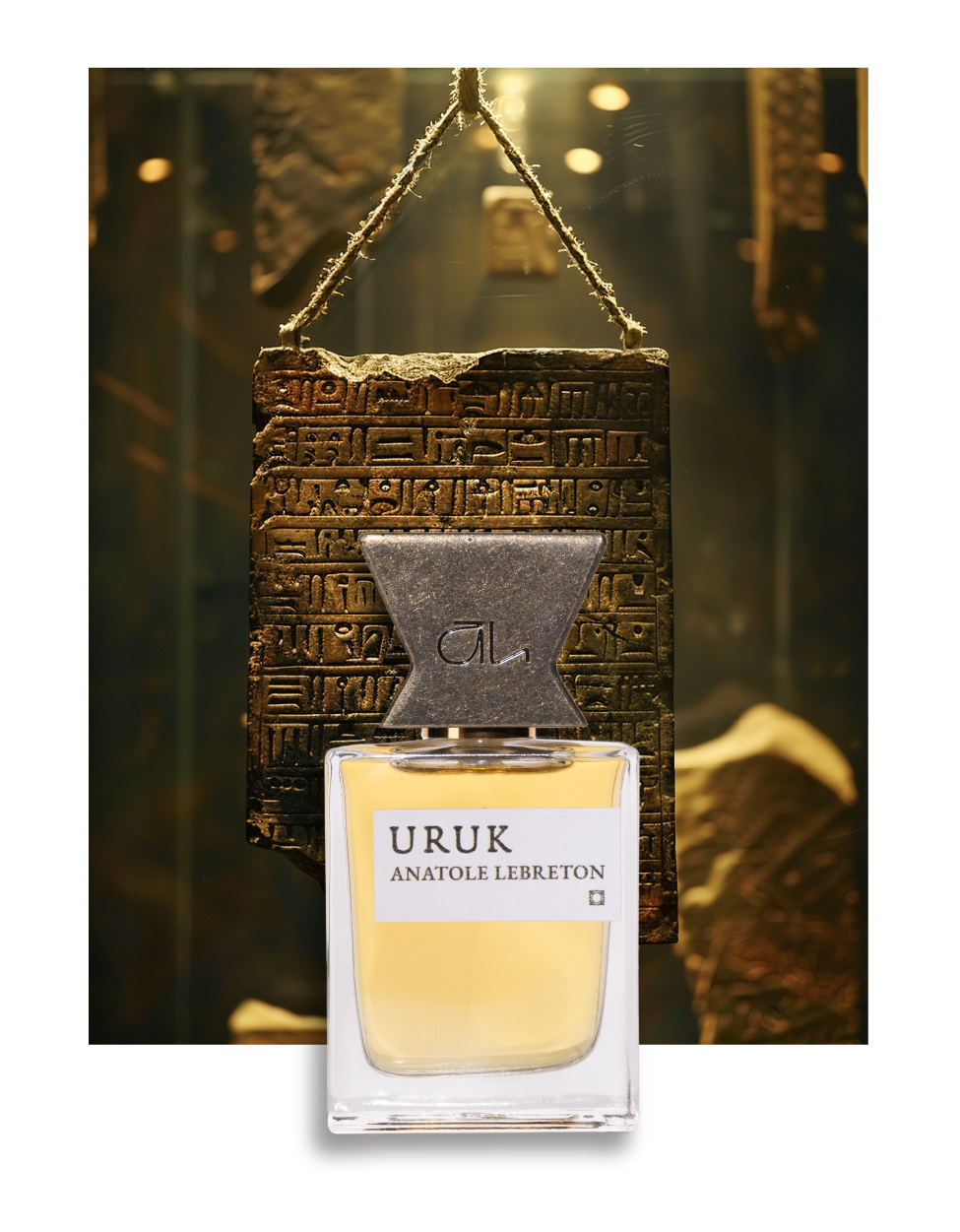
Uruk, Mesopotamia - in the south of today's Iraq - 5000 years ago, the birth of writing. To better handle the flow of goods and foodstuffs in the city-state of Uruk, Sumerians used the tip of a dried cane to write nail-shaped signs on clay tablets. They matched these symbols to sounds or words, inventing the first writing system.
An unprecedented invention, writing is a formidable creative act: an idea is materialized by symbols to which a meaning is assigned. Writing fixes language on a lasting medium, capturing spoken words that would otherwise vanish.
Olfactory canvas
Orange, nutmeg, elemi
Burning incense, cistus oil
Labdanum absolute, benzoin, animalic amber accord (papyrus, ambrarome, ambrox)
"Covering my clay tablets with fragrant symbols and cuneiform signs, I wrote the formula of this fragrance, crackling with resins and burning incense."
"Covering my clay tablets with fragrant symbols and cuneiform signs, I wrote the formula of this fragrance, crackling with resins and burning incense."
"Covering my clay tablets with fragrant symbols and cuneiform signs, I wrote the formula of this fragrance, crackling with resins and burning incense."
AT THE HEART OF THE COMPOSITION
Cistus from every angle. A woody, leathery, animalic raw material fundamental to amber accords, cistus labdanum is here treated without mercy to magnify its dark, burning side, reinforced by pyrogenic incense and benzoin. For a spicy bite at the top, a generous shot of nutmeg and a hint of orange. An elixir straight from antiquity.
NOS RECO